Showing posts with label Readers and Writers. Show all posts

Thursday, August 21, 2014

Time to Return

     Summer is winding down- I have just a few days left to soak in the last few days with my children and try (most likely not complete) to organize my house before returning.  I love the first few days of school, the smell of new pencils- the nervous anticipation of both the teachers and their new students, and the tearful goodbyes from parents as they entrust us to care and teach their children.
     There is a lot of pressure on teachers to perform and perform well under any circumstance. This year our school was moved the the SINA list (Schools in Need of Improvement). We were not able to make the expected growth and reach the goal of 100% proficient in the areas of reading.  Let's look at that number again- 100% ... Is that even realistic? I know it's not mathematically possible to have 100% proficient.  We needed 85%  to reach safe harbor we had 80%.  5%= about 15 children of all tested.  Well, what now?
We can beat ourselves up, we can ask what we did "wrong", we can make excuses (legit or not) or we can move on and ask what can we do to improve.  The tests aren't going to get easier, the expectations will not lessen, and we cannot control the environments in which our children come from. So what can we do?
   Well this summer I read more about ways to improve my instruction.  Ways that are supported by research, years of research and authentic evidence gained in a classroom.  I've gone back to my favorite authors and reread what they see as best practice in order to see where I can improve.  Anyone who thinks teachers just take the summer off are kidding themselves- this is the time we can refocus, regroup, and find ways to improve our craft.
     I started with Patrick Allen's Conferring.  Now some people may not like the flow of the book or find it dry, I on the other hand love his approach to conferring and how he starts the year setting the tone for respect that fosters communication within and between himself and his students.
                                                     
Then I went back to my other favorite author Kylene Beers in Notice & Note.  If there is one regret from last year it was not getting my hands on this book sooner!  I read and implemented her strategies in February- it would have been great to have started that at the begininning of the year (which is my plan for this year).  This text looks at having kids notice "signposts" within the text and evaluating them to gain a deeper understanding of the characters and story development.  Love. Love. Love this book!
                                                     
Lastly, to dive more into writing instruction and conferring in workshop I turned to Mr. Carl Anderson.  You cannot go wrong with his books! He has great practical ideas and lessons that help you confidently teach and confer in the writer's workshop.


Whew! Long and lengthy post about a summer of what some might call "boring" reading.  But, no matter what anyone says teaching is not simple- you should NEVER pull out the same exact old lessons you've done for the past however many years and never take time to reflect on whether they are actually meaningful, and purposeful.  That is exactly what I do each summer and all throughout the school year.  Is it work? Heck yeah- but it's my job, I'm good at it, and I want to continue to be good at it.

Thursday, January 30, 2014

Get to the POINT!

   As we move through our genre of informational text (procedural) I want my children to truly understand how to develop a topic for an audience.  One thing they must do is to think of not only the topic, but also what is the point they are trying to make with their readers.  In an informational text the point or focus of the topic is stated in the conclusion, throughout the body, and in the conclusion.  In order to do this the children must ask themselves questions about what they've read and what they're writing.


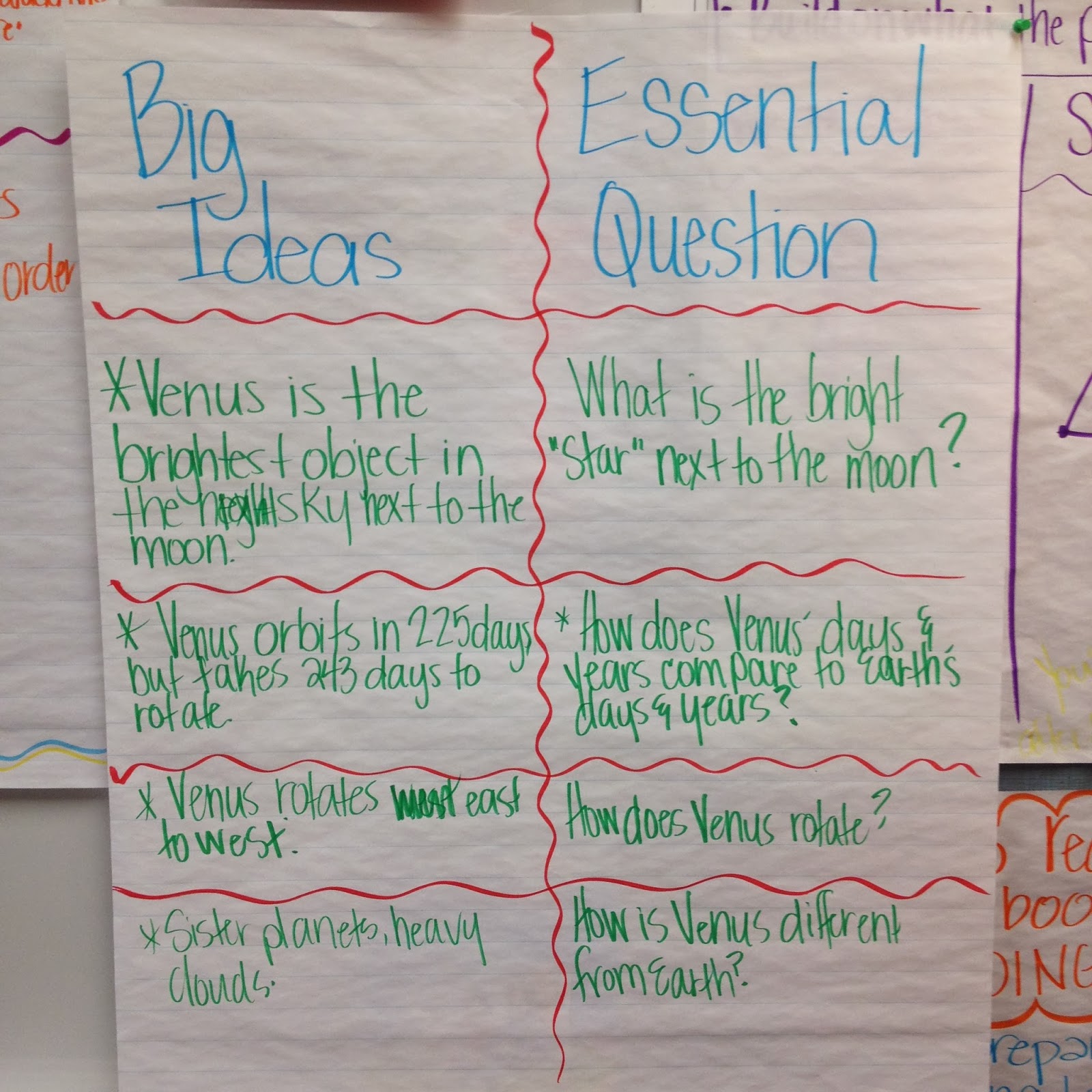
Using the book Nonfiction Mentor Text as my guide I set out to do just this.  After looking at these questions we then used Venus by Seymour Simon book (used earlier to teach text structure) to determine what were his big ideas and what essential questions did he use that guided his writing.  I reminded students again and again throughout the process that we write with the reader in mind! Here is their thinking after reading the first few pages of the book: 


I'll be honest- it was really hard for them to come up with question that he sought to answer.  Definitely a skill that we will be developing as we move through this genre!  


Day 2 of Close Reading

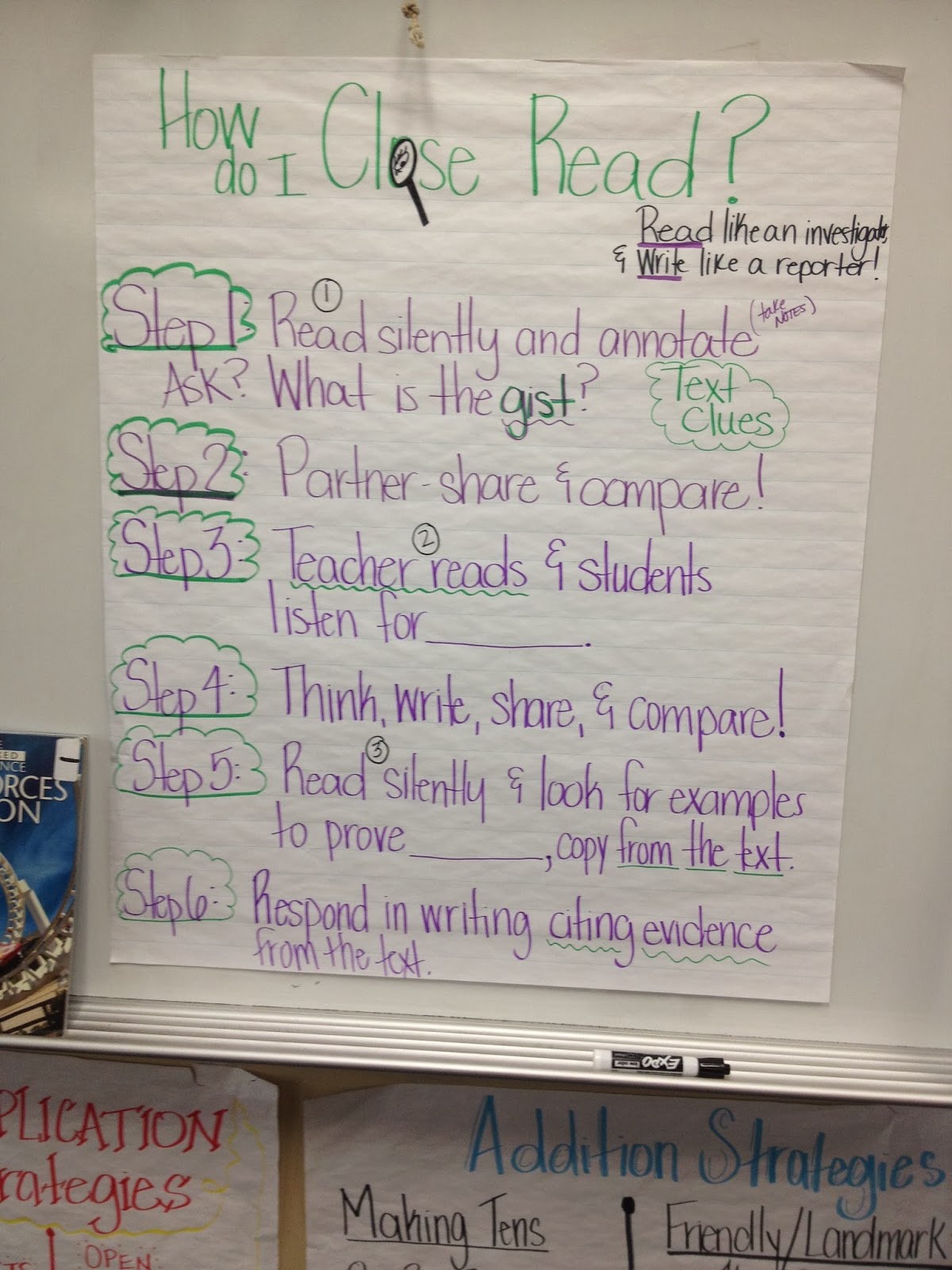
On this day we went back to our article from Newsela and explored the next few steps in close reading.  After reviewing what they wrote yesterday during their reflection of the article, they once again read the article, but this time with a specific focus.  I wanted them to read the article and find evidence that proves that this is an important piece of technology.  The goal of close reading is to really get kids to read and understand what is happening in the text.  Read like investigators and write like reporters!  This is a valuable skill to learn as we will be moving forward with research, it will help them read with a question in mind and find information that meets their purpose.  

I can't find the original source for the anchor chart- but I got it from Pinterest- if you know the owner please let me know so I may give them credit.  


Friday, January 24, 2014

Taking a "Closer" Look at Informational Text

      Yesterday we began learning how to use the "Close"  reading strategy when reading informational text.  I love this strategy because it really helps to deepen the student's understanding of not only the topic, but how we as readers have read carefully when encountering new text.
      For this lesson I pulled an article that was related to our current unit of study.  I use the website Newsela to pull these as I am able to vary the levels to match the readers. So we read an article about developing cheaper solar cells.  The first step that I taught them for this strategy was to read the article silently while asking questions and annotating the text.  This is a great way for me to see what they are noticing within the text and the types of questions they were asking.  We then moved on to step two and had I them get with a partner and share and discuss what they noticed, and any lingering questions that their partner may be able to answer.  Step three in our "Close" process" was to come up to group and read the article aloud to them a second time.  While I read I asked them to listen for details that support the main idea/topic.  I think this went very well because they had read and discussed it previously and were able to identify these details quite easily.  Lastly, for this lesson they went back to their seats and thought about what they read, then wrote about it, this too they shared with a partner.


  Today, I will bring the focus to our writing about the article.  The underlying of idea of "Close" reading is for them to learn to read like and investigator, and write like a reporter.  So, we will go back and reread the article a third time, and look for examples to prove the main idea/topic.  They will have to respond to the writing by citing evidence from the text.  
   I know it may seem like a lot of steps for one piece of text, but it is critical that the students learn how important it is to really examine an informational text to be sure they are understanding all the pieces.

Friday, December 6, 2013

How We Organize Ourselves

We've begun yet another unit of inquiry for our IB studies.  This is another social studies based unit- we are exploring through investigating government systems.  We launched the unit by having the kids think about what it means to be a global citizen verses a citizen of the United States. Our ultimate goal is for the kids to realize that we are not the only type of government that is in the world- many countries  are ran in different ways good or bad.  Despite our differences in government, our country also has to work others on global matters.
Now how do we make this accessible and relevant to children who are 9 & 10 years old?

Now, as you can see they don't have a lot of background knowledge- especially when it comes to a global citizen.  So we have a lot of work to do!! 

Thursday, November 7, 2013

Leaders in Time of Conflict

So keeping with our Unit of Inquiry we really needed to begin looking at leaders so we can examine how they responded in time of conflict and ways they expressed themselves.  I wanted the students to examine both sides of the Civil Rights Movement and make comparisons on what each contributed to the movement, good or bad.  So I composed a list of supporters and opponents and had the children choose one from each side. They were then to research a bit about each person, telling me what they did and how the two were connected . The students organized their thinking in a Venn Diagram.

This was a big eye-opener for some of my children because they just could not fathom how someone would think in such a "backward" way. 

Studying Conflict Through Biographies

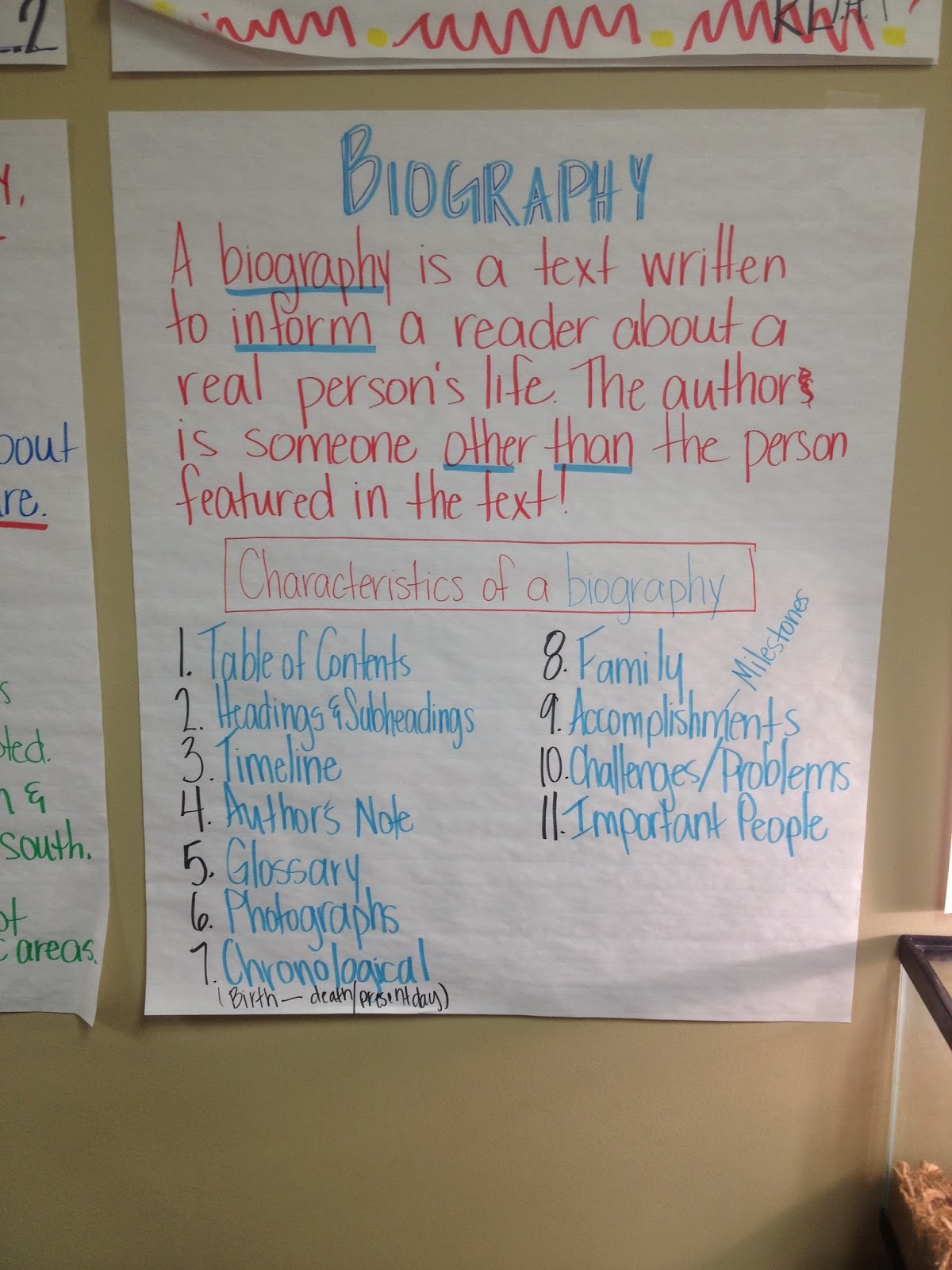
      In our district we use the Linda Dorn model for literacy instruction. One component of that is to apply our CCSS for literacy into a study of genre.  Our current genre study is Biographies. So within this we not only tie in our IB Unit of Inquiry, but we also tie in our standards of focus for the unit.  With this unit our Power GLE or CCSS is RI.3, "Explain events, procedures, concepts, or ideas in a historical text, scientific or technical text, including what happened and why, based on specific information in the text."  The students are also expected to conduct a short research project.  Whew! What a lot to put into a 6 week study!!

    We launched with our study of conflict.  This was used a gateway to open discussion up to how we express ourselves in times of conflict. Sounds easy enough, but to tie in our genre and GLEs is challenging. So our first goal was to build some background knowledge of our content tie in, for the first part it was Civil Rights Movement.  We read several biographies from Martin Luther King Jr, to Rosa Parks, and Ruby Bridges.  Within these we studied specific features of the genre biographies.

After modeling, I sent the students out to find examples of these characteristics within biographies around the room, they flagged the examples they found.  I feel it is not only important for them to be able to identify these characteristics, but to also explain how these help us gain understanding of the text.  This part was done as a response in their reading journal.  

Wednesday, January 9, 2013

New Literature Discussion Groups

Today we began our new literature discussion groups.  Each group meets twice a week and I confer with them in between meetings to check on their understanding and look over their log responses.  We spent the first six weeks of school establishing the routine of a group as well as how to create a good response.  I took a lot of what I do from the Reader's Notebook and from Inside the Reading and Writing Classroom.  Both are excellent resources if you are wanting to launch a true Reader's & Writer's Workshop.
Shadow Children Boxed Set: Among the Hidden, Among the Impostors, Among the Betrayed, and Among the BaronsJust Ella (Turtleback School & Library)[ JUST ELLA (TURTLEBACK SCHOOL & LIBRARY) ] by Haddix, Margaret Peterson (Author) Aug-01-01[ Hardcover ]    The next series of  books the children chose for groups are Among the Hidden , Just Ella, Juliet Dove, Queen of Love, Blue Eyed Daisy, and Ida BIda B: . . . and Her Plans to Maximize Fun, Avoid Disaster, and (Possibly) Save the WorldA Blue-Eyed Daisy (Aladdin Fiction)Juliet Dove, Queen of Love: A Magic Shop Book

I am really excited about all of these books- they have chosen every thing from science fiction, to fairy tales! Over the next few posts I'll be sharing some of their work from literature dicussion, they are all truly gifted at sharing their thoughts about the author's craft .

Thursday, July 19, 2012

It's a Mystery

So our district came out with the genre focus for our grade levels, and with me being a 4/5 combo I will do a little of each grade.  Rewind to end of the school year and I was perusing my genre list and saw fantasy!! Oh yeah, I may have even done a little dance.  That is my most favorite genre!!  Fast forward to Monday... and they made some changes!  Now instead of fantasy I get to teach mystery...  I did not do a dance this time.  Don't get me wrong I love a good mystery movie, but really it's not my cup o' tea.  But as a teacher I need to do what I teach my children and that is to broaden their reading palate.  So with that in mind I am making it a  goal to read at least one mystery this month. What are some of your favorite mysteries???

Thursday, June 28, 2012

Summer Lovin'


Yay summer time!!  Time to sleep in and lay around all day in the sun...right...WRONG!  I think that my students think this is what I do all summer long, let's be honest fellow teachers know that this does not happen.  Summers for a teacher, as much as we would love to use the 3 months to travel and sunbathe, are spent gearing up for the coming year. Sad, but true.  My summer days are spent with my children trying to keep them causing complete chaos with some constructive activity each day (like a lesson plan...) and my part time become more each month it seems photography hobby.  I love my time away from the classroom,  it gives me a chance to regroup and gear up for the next year.  
    This summer is no different, I have been part of a book study looking at this text:

I love this book!! I read it last year in about April and was wishing I had read it sooner, but there you go.  I love the ideas about creating a community of readers and writers.  Leslie has so many great ideas about the use of literacy logs, or a Book Lovers Book as she calls it that you truly have to read this text to fully understand how you can implement them in your classroom.  One of my top reads for the year.