Showing posts with label Social Studies. Show all posts

Thursday, November 13, 2014

Examining Conflict a PYP Perspective

Theme: How We Express Ourselves.
Central Idea: People use various forms of expression in times of conflict.
An inquiry into the ways in which we  discover and express ideas, feelings, nature, culture, believes and values; the ways in which we reflect on, extend and enjoy our creativity; our appreciation of the aesthetic.

     So how do you teach conflict and expression to children? How do you make it global and yet make it relevant to them so they can take action?  Well this year we approached it a little different than last. For the week prior I had images on my door of various conflicts, Civil Rights Movement, Holocaust, and Japanese interment camps, throughout the week students posted questions about the images- they were very curious to say the least.  We then moved into our provocation to create a conflict within our room.  We selected a few students who were to be our "privileged" ones throughout the day. Boy, were the other students upset.  The chosen ones got candy, computer time, extra lunch time.  There was definitely conflict and the rest could not understand what they did to get so much special treatment!
    Next we had the kids look at how our the idea of conflict was related to the key concepts of Change, Causation, and Perspective. The kids worked in groups to find the relation between the key concepts and related concept of conflict. For example:
               Perspective - What the are the points of view?
               Change- How is it changing?
               Causation- Why is it like this?


    This provocation and concept study led us right into our study of the Civil Rights Movement. The kids looked at expression as a means to create change.  They watched Martin Luther King Jr give his famous "I Have a Dream" speech, they studied how the children expressed their desire for change with the Children's March.  We also looked at the other side- how those that were opposed to integration expressed themselves, violently or with politics.  It was very powerful for the students to see just how our country has changed in the past 50 years.  They began to understand that expression is not just art, or song- but also protest, and action.
    We have continued our study by next looking at the Holocaust.  Believe me teaching this topic is very difficult- but I feel that it is important that children understand all aspects of our history, even those parts that are most difficult to understand.  Now, that being said, I did have to tread lightly on the topic they are only 10 after all! But, in the end they have developed a true understanding of this injustice and have really thought about our role in preventing such atrocities again.  The students each researched and wrote about a different aspect of the Holocaust from the Ghettos to the Death Marches. We looked at the amazing poetry and artwork of the time- including propoganda.


     Our study is coming to a close so it's time to bring it back to them.  Our school recently adopted the Olweus anti-bullying program.  So we are going to look at how we express ourselves within our conflicts here at school and at home.  They are going to use what they learned about propoganda to create some posters (for the poster contest) to put up at our school.  As part of their summative assessment they will look at images, art, or writing from different conflicts and reflect & respond to how they see the use of expression.  


Tuesday, December 17, 2013

Second round of Socratic Seminar

After our successful and passionate discussion about the branches of government (who knew?!), we tried out another seminar.  The reason why these can be so powerful is that there is no right or wrong answer! What it does do is to let the children have some time to think and reflect about what they are saying- and sometimes even get a little change of heart.  That's just what happened in this seminar.
    For this seminar we posted four provocation statements around the room.  I left them up for the week prior so the children had some time to think about them and reflect on which spoke to them.
They were:
Everyone's opinion counts.
The government is not responsible for everyone.
It's okay for some people to be very rich-they must have worked very hard.
The ones who make the rules are the most important people.

Funnily enough there were 30 children who felt that the most true statement was "Everyone's opinion counts." and only two that felt "The government is not responsible for everyone."  So instead of starting with why you chose such and such.  I simply started with one that was not chosen and asked them why no one chose that- is it not also true?  That was it folks- the rest was a 30 minutes (no kidding) discussion as to what is true and why they felt that way.  I had a few change their minds at the end and we did some reflecting later about how what we believe influences the way we view the role of government.  Ahhh-mazing!!!!

A Socratic Seminar x 2

     You know those moments when you think later- "dang why didn't I grab my camera?!" Yep- it was one of those days.  We have been studying the branches of government so we had a little Socratic seminar to discuss our opinions on the branches of government.  What I love about the Socratic method is that there is no right answer- the children all get really involved and take on their own learning.
     After watching and discussing our videos shared in the last post- I broke them into groups to research each branch of government and highlight five important facts of each branch.  We then gathered in a giant circle and I threw out the question, "Which branch of government is the most important?"  Wow, that sparked some serious discussion!!! It was awesome and I can guarantee that they all gained a deeper learning into what they branches of government were about and the true meaning of checks and balances.  
    If you haven't tried this method yet, I highly suggest it. It gets children talking and justifying their thinking with reason and evidence.  We have used it in the content area as well as in literature discussion groups.  You can find more information about it on Read Write Think.

Friday, December 6, 2013

Building Knowledge of Democracy

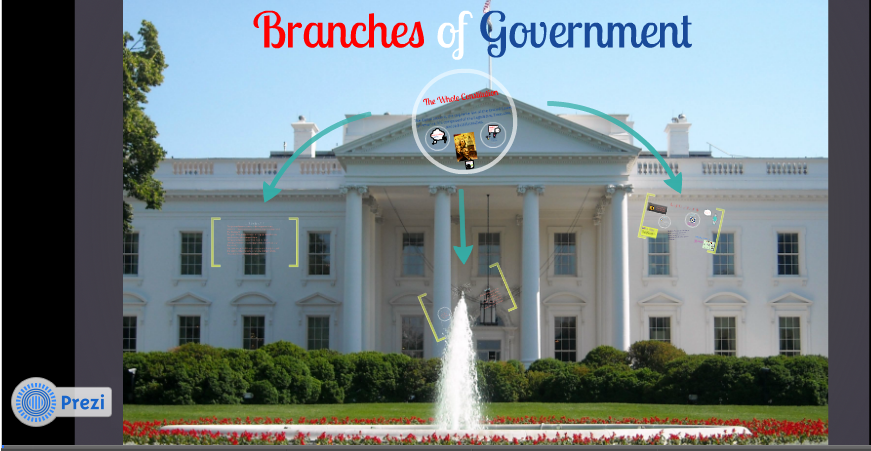
The first step to understanding our government was to help them understand the power of checks and balances.  I showed them a prezi (one of my favorite presentation tools) that took them through the branches.  You can view it here.


Then flocabulary as a great little rap that definitely got them going- to this day some of the sing the parts to help them remember the different aspects of each branch.
Overall they are getting more and more invested in learning about their government.  Maybe, hopefully I am helping create a generation of informed voters who really understand how our system works. 

Tuesday, October 22, 2013

An Inquiry Into Conflict

     Our next unit of inquiry is into the central theme of How We Express Ourselves. We are really trying to get the children to see how conflict brings out different forms of expression from peaceful protests, songs, poems, riots etc.  So the first day  I chose some kids at random and gave lots of special privileges and candy, or whatever I could find to start to create some conflict within our room.  Honestly, at the beginning no one was getting upset!! I was glad my children got along so well, but it was throwing off our social experiment. I had to up the ante and start handing on the big guns, like pencils, stars- I even had some teachers come in and give out prizes.  Then we had some conflict (directed toward me)!
     I never really shared what was happening- I just asked the kids to go home and reflect upon their feelings today and how they were expressing themselves in time of conflict.  They came in on Tuesday with some great ideas!!  ** I did let parents know on Facebook what had gone down so there were no concerns about why someone was intentionally left out**
Here is a picture of our chart the kids made- we first discussed their feelings- then they added what they new about conflicts within our world, school, or community.
It was a great discussion, and I found a lot of gaps in their understanding of war, and different types of conflict occuring now.